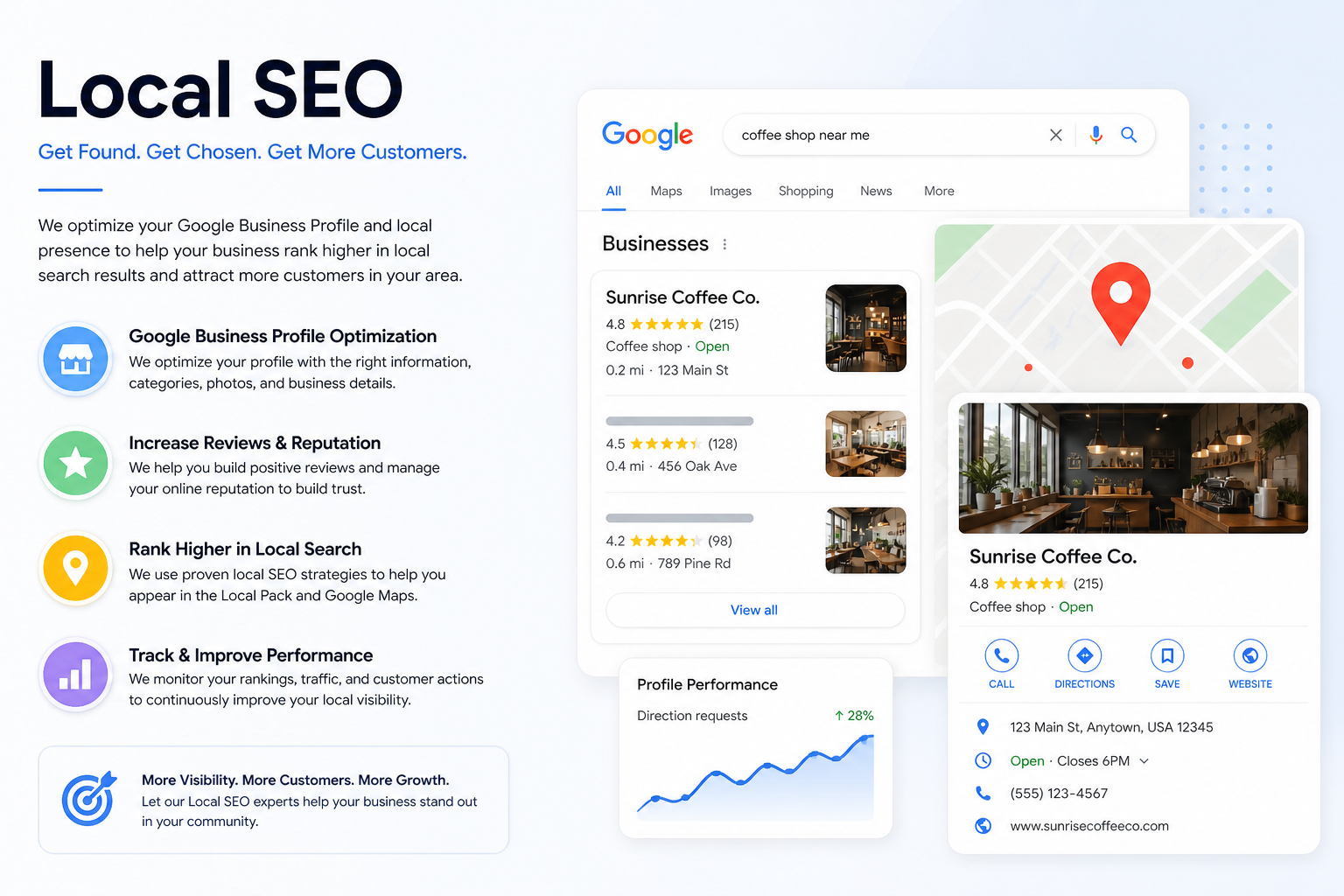
Why Local SEO drives calls, not just traffic
When someone searches "emergency plumber near me" or "best dentist in [city]", they're not browsing — they're buying. Local SEO captures that high-intent moment and converts it into a phone call. Unlike generic SEO, Local SEO is measured in calls, direction requests, and booked appointments.
Google Business Profile is the foundation
Your Google Business Profile (GBP) is the single biggest lever in local rankings. A fully optimized profile out-converts a half-built one by 2–4× in our client data.
What a high-performing GBP looks like
- Primary category that exactly matches your core service (this drives 60%+ of local ranking signals)
- Secondary categories for every additional service you offer
- Service area set to the cities/zip codes you actually serve
- 20+ geo-tagged photos uploaded over time, not all at once
- Weekly Google Posts highlighting offers, jobs completed, or seasonal services
- Q&A section seeded with the questions prospects actually ask
The 4 local ranking factors that move the needle
1. Proximity & relevance
You can't change your address, but you can strengthen relevance with city-specific service pages, embedded maps, and structured data that ties your business to the locations you serve.
2. Reviews velocity and recency
Google rewards businesses with a steady flow of recent reviews. Aim for 4–8 new Google reviews per month, with replies to every one. A profile with 80 reviews from this year out-ranks one with 300 reviews from three years ago.
3. Citation consistency
Your Name, Address, and Phone (NAP) must match exactly across the top 30 directories: Yelp, BBB, Angi, Bing Places, Apple Maps, and your industry verticals. Inconsistencies fragment trust signals and suppress rankings.
4. On-page local signals
Each service area should have its own dedicated landing page with unique content, local testimonials, embedded GBP map, and schema markup (LocalBusiness + Service).
Reviews: the conversion multiplier
Reviews don't just affect rankings — they decide who gets the call. A business with a 4.8 rating and 200 reviews will out-convert a 4.9 with 30 reviews almost every time. Build a simple post-job review request flow: SMS with a direct GBP review link, sent within 30 minutes of the work being completed.
Call tracking: stop guessing what works
Without call tracking, you're optimizing blind. Use dynamic number insertion (CallRail, WhatConverts) to attribute each call to its source — GBP, organic, paid, direct. Then feed call data into your conversion tracking so Google can optimize toward your highest-value actions.
- Track GBP calls separately from website calls
- Record and score calls for lead quality, not just quantity
- Push qualified-lead events back into Google Ads and Analytics
The 90-day Local SEO roadmap
- Days 1–14: Audit GBP, fix categories, clean up citations, install call tracking
- Days 15–45: Launch review request automation, publish weekly GBP posts, build city pages
- Days 46–90: Add schema, internal link city pages, monitor map pack rankings, double down on what's working