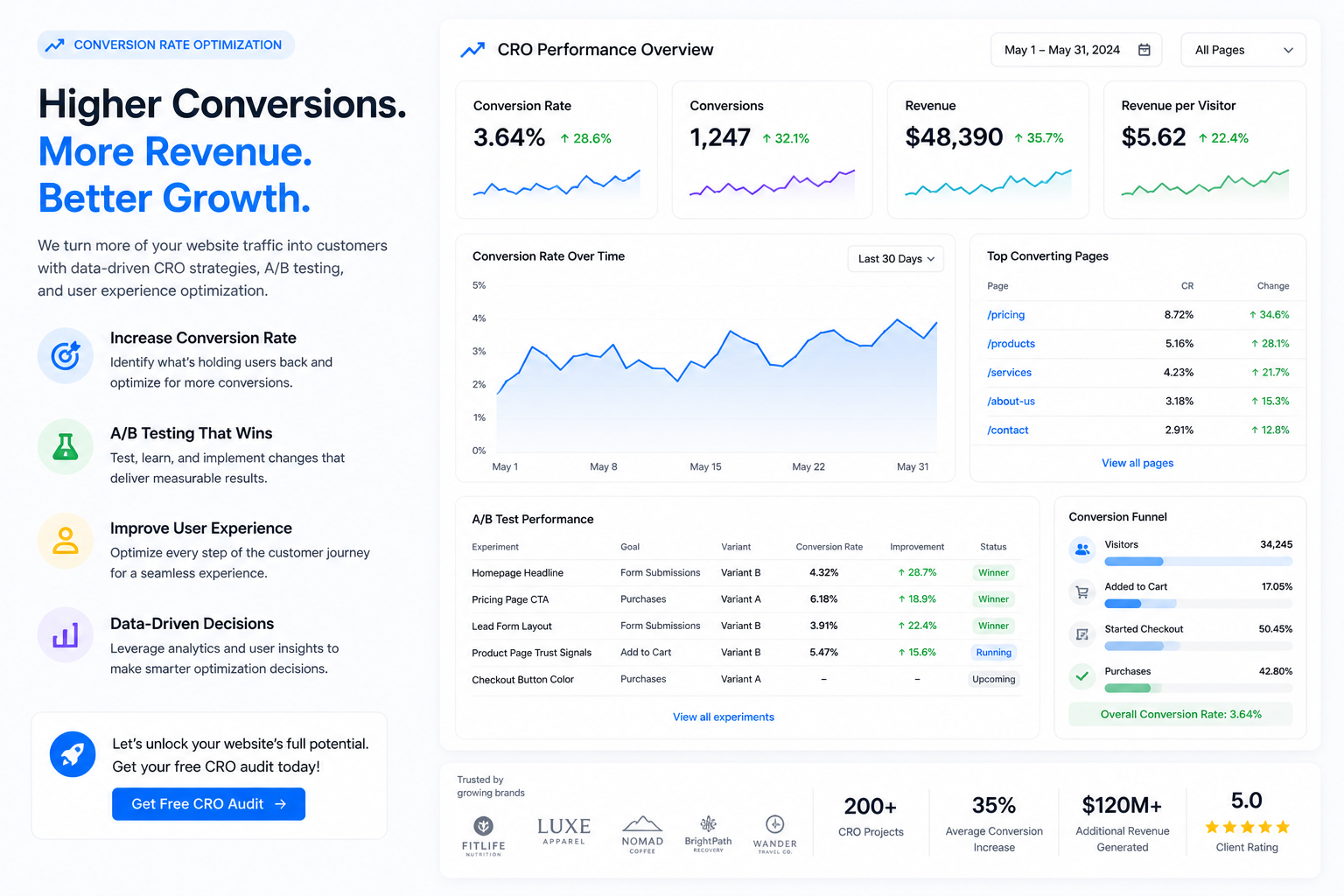
Tracking vs guessing
Without proper conversion tracking, every marketing decision is a guess. You think paid is working because lead volume is up — but you don't know which campaigns produce qualified leads versus tire-kickers. You think SEO traffic is converting — but you can't see the journey from organic landing page to closed deal.
Reliable tracking turns guesswork into a feedback loop: every campaign, page, and channel reports back exactly how many qualified opportunities it produced.
Define conversion events that matter
Don't track everything. Track the 3–5 events that actually predict revenue.
Macro conversions (the things that pay the bills)
- Qualified form submission (passes basic SQL criteria)
- Phone call longer than 60 seconds from a tracked source
- Booked meeting or demo
- Purchase or signed proposal
Micro conversions (leading indicators)
- Pricing page view + 30s+ time on page
- Case study download
- Returning visitor from the same source within 7 days
Build a layered tracking stack
- GA4 + Google Tag Manager for event collection and routing
- Server-side tagging for accuracy when iOS, ad blockers, and browser restrictions interfere
- Call tracking (CallRail, WhatConverts) with dynamic number insertion
- CRM integration so qualified leads close the attribution loop back to source/campaign
- Offline conversion uploads to Google Ads so the algorithm optimizes toward closed revenue, not just form fills
Attribution: the question is "what got the credit?"
Last-click attribution is the default and usually wrong. A buyer might find you through SEO, return three times via direct, then click a brand search ad before converting — and last-click hands all credit to that brand campaign. Use data-driven attribution in GA4 and Google Ads where possible, and validate with self-reported attribution on your forms ("How did you hear about us?").
Landing pages: where tracking meets conversion
The fastest way to improve lead-gen performance isn't more traffic — it's higher conversion rates on the traffic you already have. Build dedicated landing pages per campaign with:
- One clear, specific offer matching the ad or query intent
- Above-the-fold proof: client logos, ratings, recent results
- A single primary CTA repeated 2–3 times down the page
- Friction reduction: minimum required fields, click-to-call on mobile
- Heatmap and session recording (Microsoft Clarity, Hotjar) to find drop-off points
Common tracking mistakes
- Counting every form submission as a "lead" without filtering spam or unqualified
- Tracking GBP calls and website calls under the same event
- Forgetting to exclude internal IPs from GA4
- Not pushing CRM-stage updates back to ad platforms